
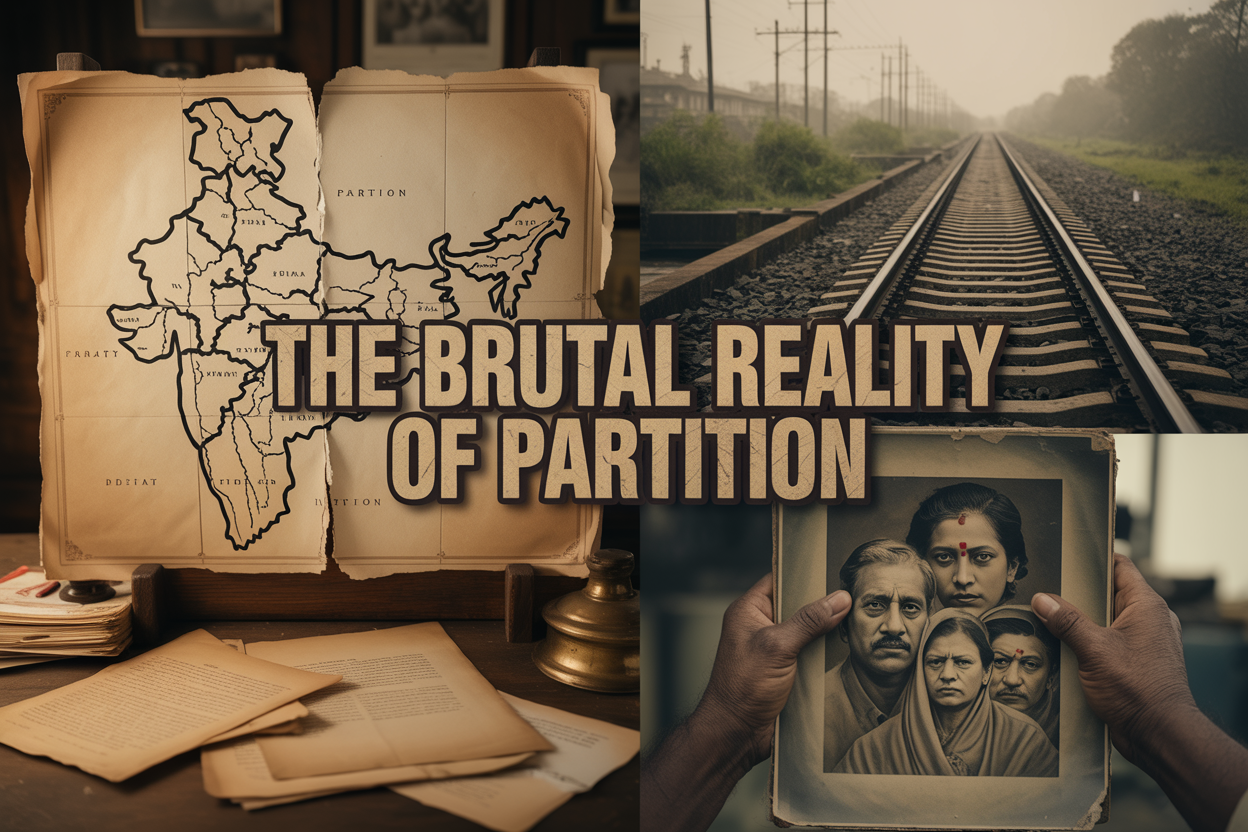
Most people think they know the story of India’s Partition in 1947 – mass migration, communal violence, and the birth of two nations. What they don’t know are the shocking truths buried beneath decades of sanitized textbooks and political narratives.This deep dive into the Partition of India hidden truths is for anyone who suspects there’s more to this story than what you learned in school. If you’re a history enthusiast, student, or simply someone who wants to understand how one of the 20th century’s most devastating events really unfolded, you’re about to discover some uncomfortable realities.Your history books likely skipped over the calculated political games that made Partition inevitable, painted an incomplete picture of human suffering that went far beyond death counts, and never mentioned how an entire shared cultural heritage was deliberately wiped out. We’ll uncover the British divide and rule tactics that set the stage for disaster, examine the true human cost that historians rarely discuss, and reveal how centuries of shared traditions were systematically erased to create artificial divisions.These aren’t just academic footnotes – they’re essential pieces of the puzzle that explain why the subcontinent still grapples with the aftermath of those traumatic months in 1947. Get ready to see India Pakistan partition political manipulation through a lens your textbooks never provided. The truth about India’s Partition extends far beyond the sanitized versions found in textbooks. The hidden political manipulations that orchestrated this division, the immeasurable human cost that transcended mere statistics, and the systematic erasure of centuries-old shared cultural heritage reveal a complexity that demands our attention. These uncomfortable realities shaped not just the borders of two nations, but the very fabric of millions of lives across generations.Understanding these untold aspects of Partition isn’t about reopening old wounds—it’s about acknowledging the full scope of this historical tragedy. Only by confronting these harsh truths can we begin to comprehend the lasting impact on communities, families, and the collective memory of the subcontinent. The stories that were deliberately silenced deserve to be heard, remembered, and learned from as we navigate our shared future.more
The Hidden Political Manipulations Behind Partition
British Divide and Rule Strategy That Accelerated Religious Tensions
The British colonial administration systematically exploited religious differences to maintain control over the Indian subcontinent, laying the groundwork for the eventual India Partition 1947. This deliberate strategy of British divide and rule India created artificial rifts between Hindu and Muslim communities that had coexisted for centuries. Colonial policies consistently favored one community over another in different regions, fostering resentment and mistrust that would prove instrumental in justifying partition.The British introduced separate electorates for Muslims through the Morley-Minto Reforms of 1909, institutionalizing religious divisions in the political framework. This Partition of India political manipulation created a precedent for viewing Indians primarily through religious identities rather than as a unified population. The colonial administration amplified minor disputes and presented them as irreconcilable religious conflicts, gradually eroding the shared cultural fabric that had bound diverse communities together.Last-Minute Boundary Changes That Ignored Ground Realities
The Radcliffe Line controversy represents one of the most catastrophic examples of administrative negligence in modern history. Sir Cyril Radcliffe, who had never visited India before, was given just five weeks to draw boundaries that would affect millions of lives. These hasty decisions completely disregarded demographic realities, economic interdependencies, and cultural connections that had developed over generations.The boundary commission made several last-minute alterations that defied logic and ground realities. Entire villages were split arbitrarily, separating families and communities that had lived together for centuries. Agricultural areas were severed from their natural markets, and water resources were divided without considering the survival needs of affected populations. These India partition untold stories reveal how bureaucratic decisions made in air-conditioned rooms in Delhi and London created humanitarian disasters on an unprecedented scale.How Political Leaders’ Personal Ambitions Overrode Public Welfare
The rush toward partition was significantly accelerated by the personal ambitions of key political figures who prioritized their own power over public welfare. The Partition of India hidden truths reveal how negotiations became more about securing individual political legacies than protecting the millions who would suffer the consequences. Leaders on all sides made compromises that served their immediate political interests while ignoring the long-term humanitarian implications.The haste with which partition was implemented reflected political leaders’ desire to cement their positions rather than carefully plan for a smooth transition. Critical decisions about refugee rehabilitation, property distribution, and administrative continuity were postponed or ignored entirely. This political opportunism transformed what could have been a managed separation into a chaotic exodus that claimed countless lives and destroyed communities that had flourished for generations.The Unspoken Human Cost Beyond Death Tolls
Systematic Sexual Violence Against Women During Mass Migration
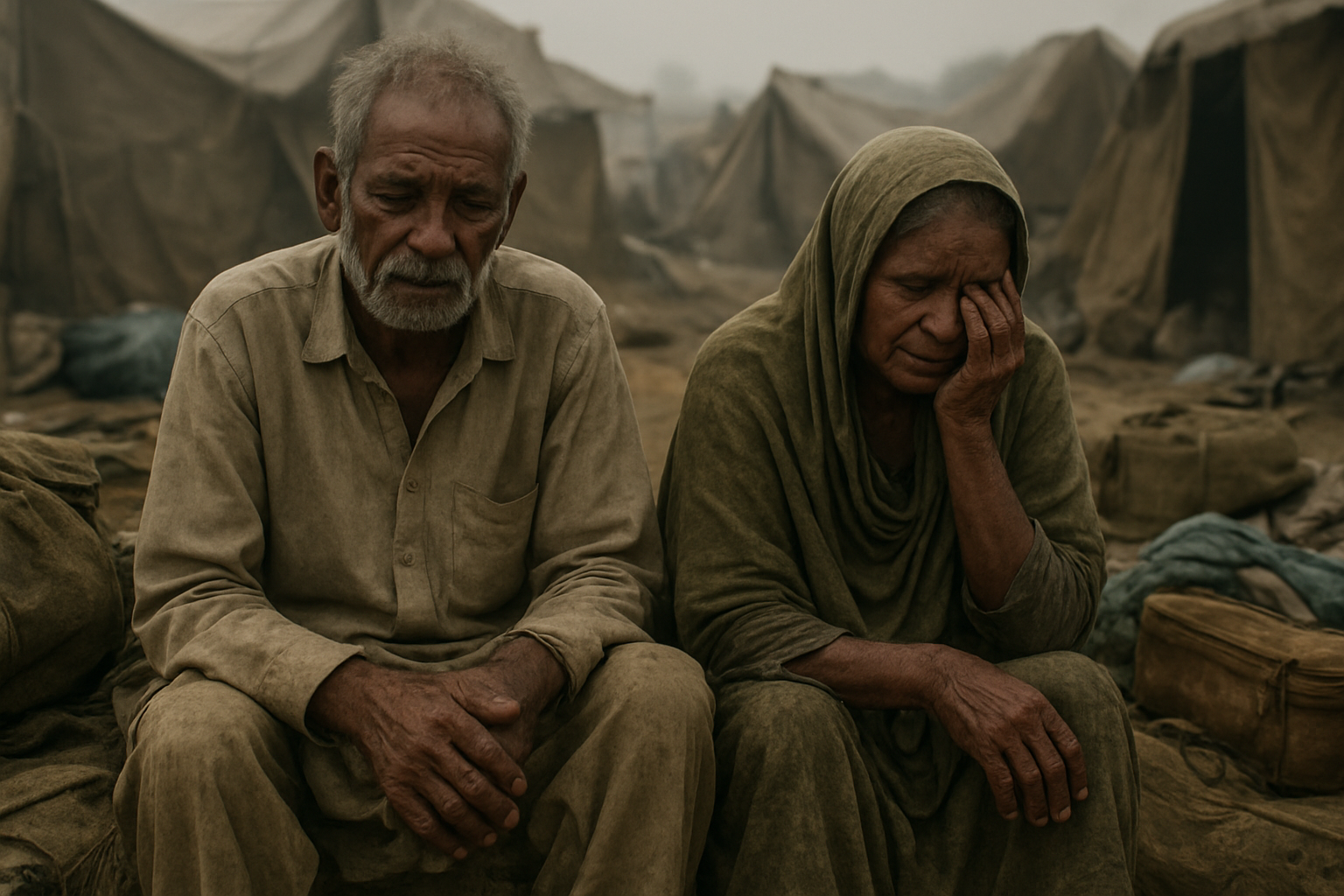
The 1947 Partition of India witnessed widespread sexual violence that remains largely undocumented in mainstream historical narratives. During the chaotic mass migrations following the Radcliffe Line demarcation, women became targets of systematic assault, abduction, and forced conversions. These brutal acts were not random occurrences but deliberate strategies employed to humiliate entire communities and assert dominance over the “other.”The scale of this violence was staggering, with thousands of women disappearing during the exodus. Many were forcibly married or sold into slavery, their identities erased along with their connections to family and homeland. The trauma extended beyond the immediate victims to entire generations who carried the psychological scars of witnessing such atrocities.Children Orphaned and Lost Forever in the Chaos
Now that we have covered the violence against women, the plight of children during Partition represents another hidden tragedy of this historical catastrophe. Thousands of children were separated from their families during the frantic escape from violence, becoming orphans overnight or simply vanishing in the massive crowds of displaced people.Many children, traumatized and confused, wandered aimlessly across unfamiliar territories. Some were taken in by charitable organizations or adopted by families from different communities, often losing their original religious and cultural identities. These lost children grew up with fragmented memories and uncertain origins, representing a generation whose personal histories were permanently severed by the brutal reality of India’s Partition.Economic Devastation That Destroyed Generations of Prosperity
With this in mind, next, we’ll examine how Partition’s economic impact extended far beyond immediate displacement costs. Established business networks, built over generations, crumbled overnight as communities were forced to abandon their ancestral properties and enterprises. Wealthy merchants, landowners, and artisans found themselves destitute, starting from zero in unfamiliar territories.The disruption of traditional trade routes and the loss of inherited wealth created economic shockwaves that reverberated for decades. Families who had accumulated prosperity over centuries lost everything, while entire industries collapsed due to the sudden exodus of skilled workers and entrepreneurs. This economic devastation became an intergenerational curse, forcing communities to rebuild their financial foundations from scratch while dealing with the psychological trauma of displacement.The Deliberate Erasure of Shared Cultural Heritage
How Communities That Lived Together for Centuries Were Torn Apart
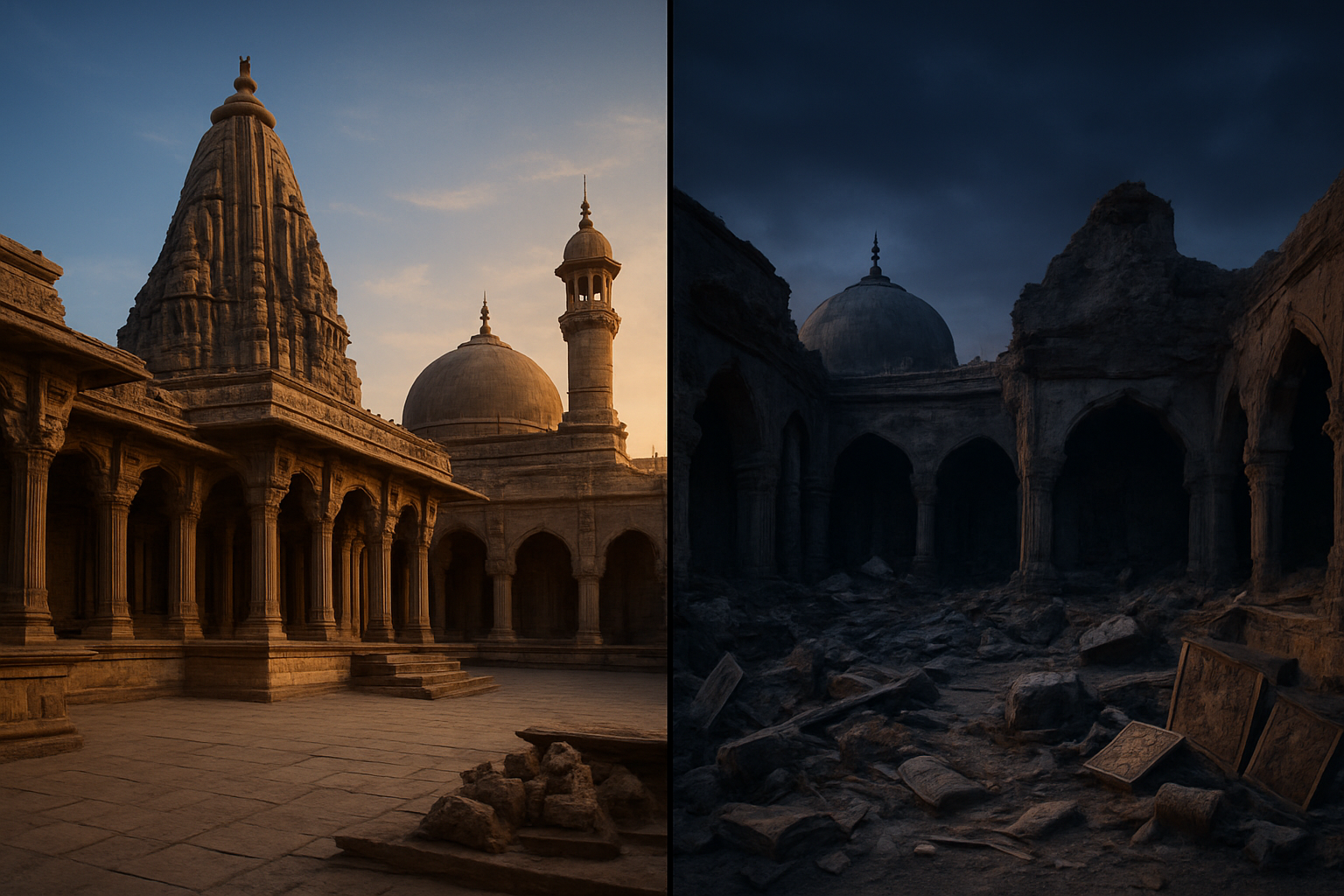
Previously, we’ve examined the political machinations and human casualties of India’s Partition, but now we must confront perhaps the most devastating loss of all: the systematic destruction of shared cultural heritage that had flourished for centuries. The Partition of India in 1947 didn’t merely redraw political boundaries—it shattered the intricate tapestry of communal life that had evolved over generations.For centuries before 1947, Hindu, Muslim, and Sikh communities had developed a remarkable culture of coexistence. Neighborhoods were integrated, with families of different faiths living side by side, participating in each other’s festivals, and sharing common spaces of worship. This organic multiculturalism wasn’t merely tolerance—it was active cultural participation that created unique hybrid traditions found nowhere else in the world.The trauma of Partition forced millions to abandon not just their homes, but their entire way of life. When communities were uprooted based on religious identity alone, the India partition cultural heritage loss extended far beyond material possessions. Generations of shared customs, languages, and traditions were severed overnight, creating artificial divisions where natural unity had previously existed.The Destruction of Composite Culture and Syncretic Traditions
With this understanding of communal separation in mind, we must examine how Partition systematically dismantled India’s composite culture—a unique civilization that had seamlessly blended diverse religious, artistic, and social traditions. This syncretic heritage represented the true genius of the subcontinent’s civilization.Consider the architectural marvels that embodied this synthesis: mosques with Hindu decorative elements, temples incorporating Islamic geometric patterns, and Sikh gurdwaras that borrowed from both traditions. The British colonial legacy in India deliberately undermined these examples of cultural unity by emphasizing religious differences rather than celebrating shared artistic achievements.Music and literature suffered equally devastating losses. Classical traditions like Hindustani music, which had evolved through the collaboration of Hindu and Muslim musicians, were artificially compartmentalized. Poets who wrote in Urdu—regardless of their religious background—suddenly found their language associated exclusively with Pakistan, while Hindi was claimed solely for India.The cultural practices that had defined daily life for centuries were suddenly viewed with suspicion. Festivals that had been celebrated collectively became markers of religious identity. Food traditions, clothing styles, and even architectural preferences were scrutinized through the new lens of national and religious allegiance.Educational Narratives That Whitewashed the Complexity of Coexistence
Now that we have covered the immediate cultural destruction, we must examine how post-Partition educational systems deliberately obscured the reality of pre-1947 coexistence. Both India and Pakistan developed historical narratives that simplified the complex truth of centuries-long cultural integration.Educational curricula on both sides of the border began emphasizing the inevitability of separation, portraying the India Pakistan partition as the natural result of irreconcilable differences. This historical revisionism served political purposes but erased the lived experience of millions who had known a different reality.Textbooks systematically omitted examples of successful cultural synthesis, instead focusing on periods of conflict to justify the division. The contributions of cross-community collaboration in art, science, and philosophy were minimized or attributed exclusively to one community or another. This educational whitewashing created generations who couldn’t imagine the possibility of the integrated society their grandparents had known.The Partition of India hidden truths include the deliberate suppression of stories about inter-community marriages, shared religious practices, and collaborative resistance against colonial rule. These narratives were deemed incompatible with the new national identities being constructed on both sides of the border.This educational manipulation continues to impact how the India partition historical facts are understood today, perpetuating divisions that were artificially created rather than naturally evolved. The truth about India’s Partition extends far beyond the sanitized versions found in textbooks. The hidden political manipulations that orchestrated this division, the immeasurable human cost that transcended mere statistics, and the systematic erasure of centuries-old shared cultural heritage reveal a complexity that demands our attention. These uncomfortable realities shaped not just the borders of two nations, but the very fabric of millions of lives across generations.Understanding these untold aspects of Partition isn’t about reopening old wounds—it’s about acknowledging the full scope of this historical tragedy. Only by confronting these harsh truths can we begin to comprehend the lasting impact on communities, families, and the collective memory of the subcontinent. The stories that were deliberately silenced deserve to be heard, remembered, and learned from as we navigate our shared future.more
You write with so much clarity and confidence. Impressive!
Для выведения токсинов и нормализации обменных процессов применяются инфузионные терапии с препаратами, поддерживающими функции печени, почек и сердечно-сосудистой системы. Медикаментозное лечение включает витамины, гепатопротекторы, седативные и противосудорожные средства при необходимости. Психологическая помощь и психотерапия способствуют стабилизации психоэмоционального состояния и профилактике рецидивов.
Исследовать вопрос подробнее – https://narkologicheskaya-pomoshh-samara0.ru/narkologicheskaya-klinika-samara/
Start winning today with 77judi and experience true gaming excitement.
77-judi has rapidly become a popular topic in recent times.
?Levantemos nuestros brindis por cada buscador de riquezas !
Los jugadores valoran la transparencia en los mejores casinos sin licencia en EspaГ±a. casinos online sin licencia. La claridad en los tГ©rminos y condiciones es fundamental antes de hacer depГіsitos. Esto ayuda a evitar sorpresas desagradables en el futuro y asegura una experiencia mГЎs segura.
La variedad de mГ©todos de pago en los casinos en lГnea sin licencia en EspaГ±a es un atractivo importante. Los usuarios pueden optar por soluciones de pago tradicionales y criptomonedas, lo que aumenta la comodidad. Sin embargo, es vital investigar la seguridad de estos mГ©todos antes de realizar transacciones.
ВїEs seguro jugar en casinos online sin licencia en EspaГ±a? – п»їhttps://puertadetoledo.es/casinos-sin-licencia-en-espana/
?Que la fortuna avance contigo con exitos deslumbrantes botes monumentales !
Discover endless entertainment at casino zodiac with hundreds of exciting games.
Detailed game guides help new players learn the rules quickly.
best casino bonus Bangladesh
This helped clarify a lot of questions I had.