
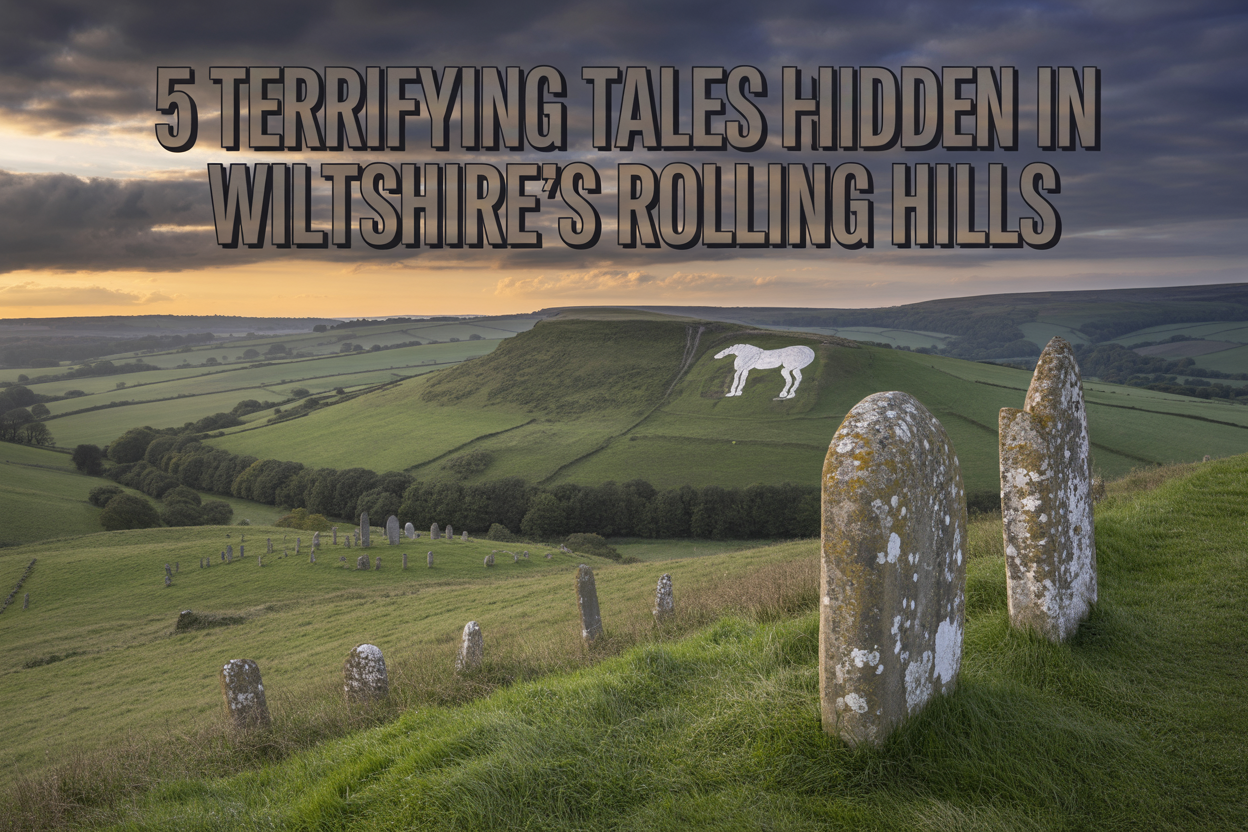
Wiltshire’s peaceful countryside hides some genuinely disturbing secrets beneath its green Hills. This collection is for history lovers, folklore enthusiasts, and anyone fascinated by the darker side of England’s past.
These five terrifying tales blend archaeological discoveries with centuries-old legends that still send shivers down locals’ spines. You’ll discover the Blood Stone at Luccombe Spring, where Romano-British sacrifices may have taken place on a red-stained rock marked with mysterious indentations. We’ll explore how Bratton Camp’s iron age fortress became a death trap for starving Viking invaders after the Battle of Ethandun.
The stories also reveal why locals claim the White Horse of Westbury comes alive at midnight to drink from ancient springs, and uncover the mass graves hidden in Luccombe Valley where Danish blood once soaked the earth. Each tale shows how archaeological facts and dark folklore traditions have twisted together over centuries, creating legends that blur the line between history and horror.
The Blood Stone at Luccombe Spring: A Site of Ancient Executions and Ritual Sacrifice
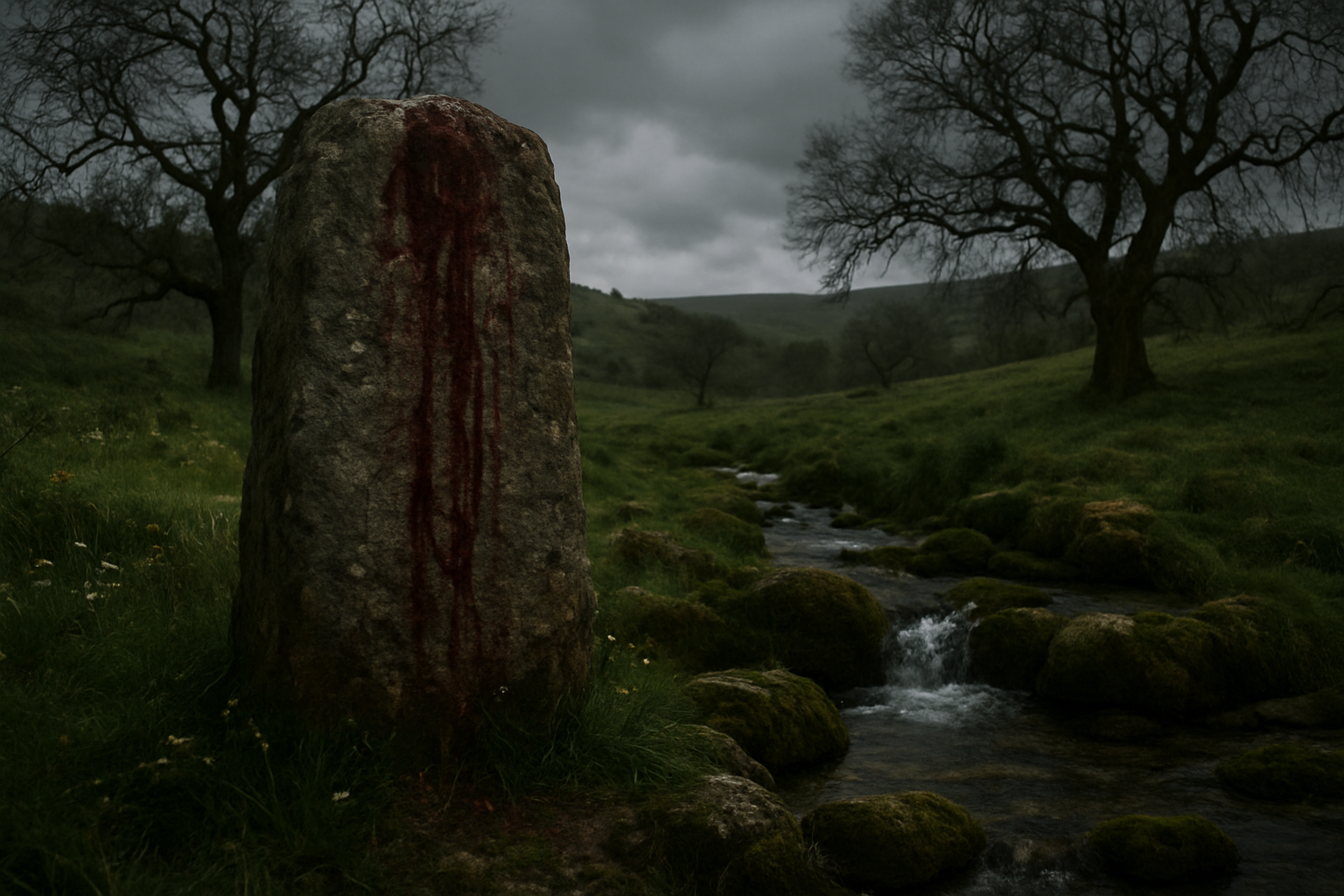
Discovery of the mysterious red stone and its chilling atmosphere
Deep within the verdant landscape of Luccombe Spring lies a geological anomaly that has captivated archaeologists and local historians for generations. The Blood Stone, as it has come to be known, presents itself as a distinctive reddish-hued megalith that stands in stark contrast to the surrounding limestone formations typical of the Wiltshire countryside. Visitors to the site often report an inexplicable sense of unease when approaching the stone, describing the atmosphere as heavy and oppressive despite the tranquil natural setting.
The stone’s crimson coloration, visible even from a considerable distance, has earned it a reputation that extends far beyond its immediate locality. Local accounts describe how the red staining appears to intensify during certain weather conditions, particularly after rainfall, when the mineral deposits become more pronounced and the stone seems to weep with an almost blood-like consistency.
Archaeological evidence of headless skeletons and Romano-British human sacrifice
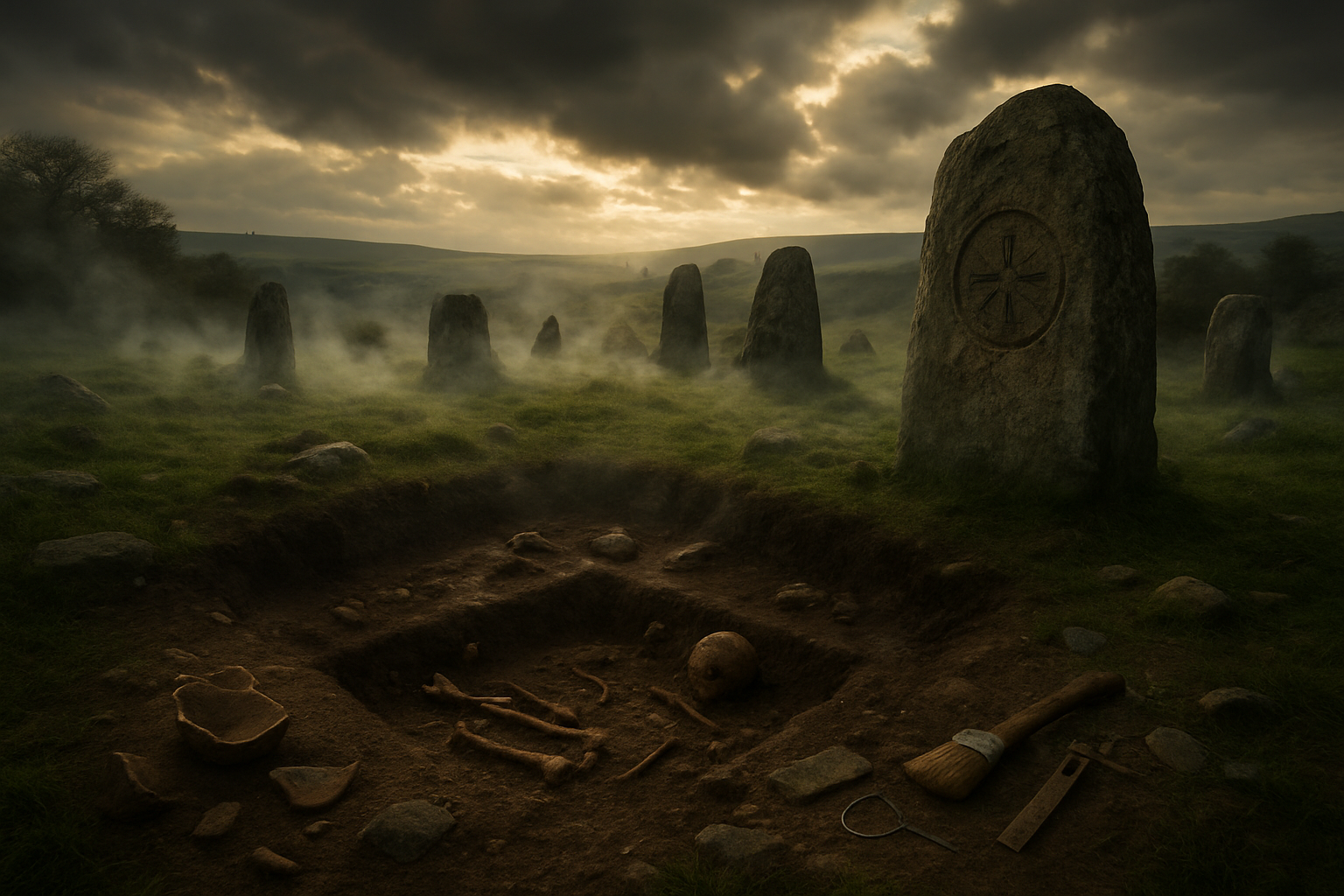
Recent archaeological investigations in the vicinity of the Blood Stone have yielded disturbing discoveries that lend credence to the site’s dark reputation. Excavations have uncovered multiple human remains displaying evidence of violent death, with several skeletons found in states of deliberate dismemberment. The positioning and condition of these remains suggest ritualistic practices rather than conventional burial methods.
The archaeological record indicates a pattern of activity spanning several centuries, with the earliest evidence dating to the late Romano-British period. Forensic analysis of the skeletal remains has revealed cut marks consistent with ceremonial decapitation, suggesting that the site may have served as a location for human sacrifice or ritualistic execution.
Conflicting theories about Saxon executions versus ancient ritual killings
Scholarly debate continues regarding the true purpose and timeline of the violent activities that took place at Luccombe Spring. One faction of researchers argues that the evidence points toward Saxon-era judicial executions, proposing that the site served as a formal execution ground where criminals and political prisoners met their fate. This theory is supported by the systematic nature of the skeletal positioning and the apparent organization of the burial sites.
Conversely, other experts maintain that the archaeological evidence suggests far older ritualistic practices, possibly dating to pre-Roman Celtic traditions. These researchers point to the ceremonial arrangement of certain artifacts and the astronomical alignment of the stone itself as indicators of religious or spiritual significance that predates Saxon occupation of the region.
The stone’s connection to bloodstone mineral folklore and dark legends
The geological composition of the Blood Stone has spawned numerous folklore traditions that intertwine scientific fact with supernatural belief. The reddish discoloration is attributed to iron oxide deposits within the stone’s matrix, yet local legends persist in attributing the coloration to the blood of ancient victims that has permanently stained the rock. Traditional folklore suggests that the stone possesses supernatural properties, including the ability to reveal the truth about past events to those who touch its surface during specific lunar phases.
These legends have been passed down through generations of local families, creating a rich tapestry of oral tradition that continues to influence contemporary perceptions of the site. The bloodstone mineral folklore extends beyond mere superstition, as historical records document the stone’s use in local divination practices and its role in seasonal celebrations tied to ancient pagan traditions.
Bratton Camp: The Iron Age Fortress That Starved Out Viking Invaders
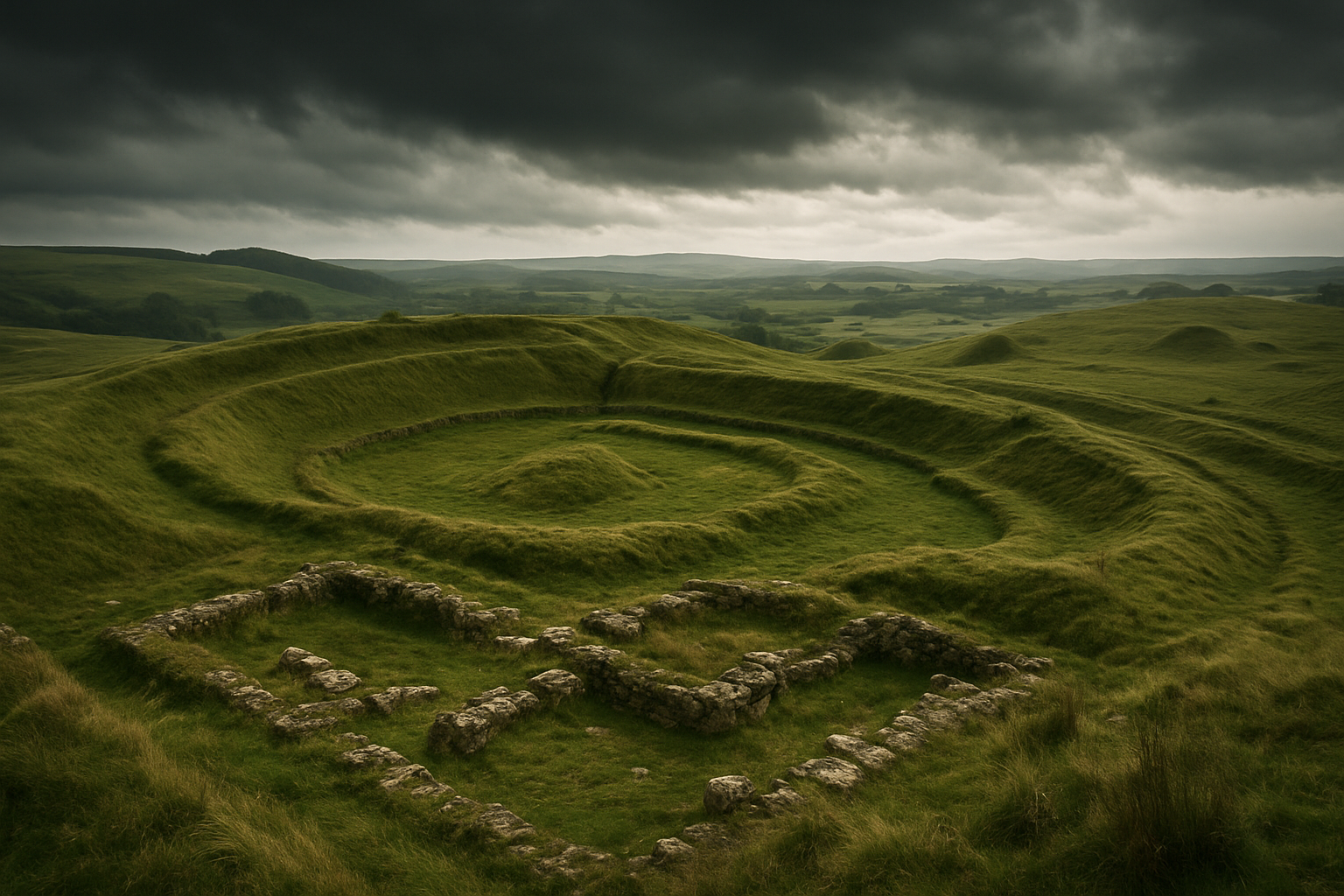
Strategic hilltop fortress with natural defenses and ancient origins
Perched dramatically atop the western edge of Salisbury Plain, Bratton Camp commands sweeping views across the Wiltshire countryside from its elevated position nearly 800 feet above sea level. The ancient earthworks that crown this windswept hilltop tell a story spanning millennia, with defensive ramparts and ditches carved into the chalk downs creating a formidable fortress that has witnessed countless conflicts throughout its long history.
The site’s strategic importance becomes immediately apparent when surveying the landscape below. Natural slopes on three sides provide inherent defensive advantages, while the single accessible approach from the southeast could be easily fortified and monitored. These geographical features made Bratton Camp an ideal location for Iron Age settlers to establish their hill fort, taking advantage of the terrain’s natural protective qualities.
Archaeological evidence suggests the earliest fortifications date back over two thousand years, with successive generations adding layers of defensive works. The massive earthen ramparts, some reaching heights of twelve feet, encircle an area of approximately 25 acres, creating an enclosed sanctuary that could shelter entire communities during times of conflict.
Guthrum’s desperate Viking army trapped without food or water
Now that we have covered the fortress’s ancient origins, the most chilling chapter in Bratton Camp’s history unfolded during the late 9th century when Viking forces under the leadership of Guthrum found themselves in a desperate situation. Following their defeat at the Battle of Edington in 878 AD, the remnants of the Danish army sought refuge within the ancient earthworks, believing the hilltop position would provide strategic advantage for their next offensive.
However, what initially appeared to be a tactical retreat soon transformed into a nightmarish siege. The very features that made Bratton Camp defensible also made it a perfect trap. Cut off from reliable water sources and supply lines, the Viking warriors found themselves isolated on the exposed hilltop with dwindling provisions.
As days turned to weeks, desperation set in among Guthrum’s forces. The fortress that promised salvation became a prison of earth and stone. Warriors who had terrorized coastal settlements across Europe now faced the slow agony of starvation, their legendary ferocity diminished by hunger and thirst. The psychological warfare was as devastating as any sword thrust, as the proud Danish army watched their strength ebb away with each passing day.
King Alfred’s brilliant siege tactics leading to English unification
With this desperate situation in mind, next we’ll see how King Alfred the Great demonstrated military genius that would reshape English history. Rather than launching costly frontal assaults against the fortified position, Alfred recognized that time and patience would accomplish what force could not. His strategy was devastatingly simple: surround the hilltop fortress and wait.
Alfred’s forces established a perimeter around Bratton Camp, cutting off all escape routes and preventing any resupply attempts. The English king understood that the same geographical isolation that made the site defensible also made it vulnerable to blockade. No relief force could approach without detection across the open downs, and the limited water sources within the earthworks could not sustain a large army indefinitely.
This siege marked a turning point in the struggle between Anglo-Saxon England and Viking invaders. Alfred’s victory at Bratton Camp wasn’t just military triumph—it represented the beginning of English unification under a single crown. The psychological impact of seeing the feared Viking war machine reduced to desperation within their own chosen stronghold resonated throughout the kingdom, inspiring other Anglo-Saxon leaders to rally behind Alfred’s banner.
Archaeological layers revealing 2,000 years of occupation and conflict
Previously, I’ve touched on the ancient origins of this site, but modern archaeological investigations have revealed the true depth of Bratton Camp’s turbulent history. Excavations within the earthworks have uncovered distinct stratified layers, each telling its own story of human occupation and violent conflict spanning two millennia.
The deepest layers reveal Iron Age pottery shards, bronze implements, and evidence of permanent settlement structures, confirming the site’s importance as a tribal stronghold long before Roman invasion. Above these ancient deposits, archaeologists have discovered Roman coins and military equipment, suggesting the fortress changed hands during the conquest period.
Most significantly, the uppermost medieval layers contain artifacts directly linked to the Viking siege: corroded weapons, horse bridles, and most haunting of all, scattered human remains bearing evidence of violent death. These bones, some showing cut marks consistent with sword wounds, provide silent testimony to the desperation that gripped Guthrum’s trapped army during those final weeks.
The archaeological record reveals that Bratton Camp’s role as a fortress didn’t end with Alfred’s victory. Subsequent layers show continued occupation through the Norman period and beyond, with each generation adding their own defensive modifications to the ancient earthworks. This continuous use over centuries has created a complex palimpsest of human conflict, where each archaeological layer represents another chapter in England’s violent past.
The White Horse of Westbury: Ancient Symbol That Drinks at Midnight

Mysterious Origins Dating Back 800 Years to Commemorate Alfred’s Victory
The White Horse of Westbury stands as one of England’s most enigmatic hill figures, carved into the steep chalk slopes of Salisbury Plain. Local historians have long debated its true origins, with some accounts suggesting the figure was first cut to commemorate King Alfred the Great’s decisive victory over the Danish armies at the Battle of Edington in 878 AD. This theory positions the horse as an ancient monument to Saxon triumph, marking the spot where Alfred’s forces watched their enemies retreat across the Wiltshire landscape.
Archaeological evidence, however, remains frustratingly elusive. The earliest documented references to the White Horse appear in medieval manuscripts from the 13th century, though oral traditions suggest the figure may be considerably older. The positioning of the horse on Westbury Hill, overlooking the ancient Ridgeway path, indicates its creators understood the strategic importance of visibility across the surrounding valleys.
Evolution from Dragon-Like Figure to Modern Concrete Horse
Historical accounts describe a dramatically different creature than what visitors see today. The original figure reportedly resembled a dragon or wyvern more than a horse, with an elongated serpentine tail and distinctive curved neck that gave it an otherworldly appearance. Victorian antiquarians recorded sketches showing a beast with clawed feet and a tail that swept in a wide arc across the hillside.
The transformation occurred in 1778 when local landowner Lord Abingdon commissioned a complete redesign of the figure. The dragon-like creature was obliterated and replaced with a more conventional horse silhouette. This new design featured classical proportions and a dignified stance that aligned with Georgian sensibilities. In the 20th century, the figure underwent further modernization when concrete and white paint replaced the traditional method of exposing bare chalk, ensuring the horse’s visibility for future generations.
Midnight Legend of the Horse Descending to Drink from Sacred Springs
Now that we have covered the horse’s historical transformations, the supernatural folklore surrounding this ancient figure reveals deeper mysteries. Local tradition speaks of the White Horse coming alive at the stroke of midnight, descending from its chalk hillside to drink from the sacred springs that bubble up from the valley floor below. Witnesses throughout the centuries have reported seeing a ghostly equine form moving silently through the darkness, leaving no hoofprints on the dewy grass.
The legend intensifies during nights of the full moon, when the horse allegedly gallops across the countryside before returning to its static position before dawn. Shepherds and night travelers have described hearing the thundering of hooves echoing across the valleys, though no physical horse is ever found. These accounts often coincide with reports of strange lights emanating from the springs themselves, suggesting a connection between the horse’s nocturnal wanderings and the underground water sources that have been considered sacred since prehistoric times.
Connection to Fertility Rituals and Celtic Goddess Worship
With this supernatural backdrop in mind, the White Horse’s deeper spiritual significance emerges through its connections to ancient fertility rituals and Celtic goddess worship. The horse symbol held profound meaning for Celtic tribes who inhabited Wiltshire long before Saxon settlement, representing Epona, the horse goddess associated with fertility, prosperity, and the protection of travelers.
Archaeological evidence from the surrounding area reveals ritual deposits of horse bones and Celtic coins featuring horse imagery, suggesting the hillside location held sacred significance for generations of worshippers. The springs where the ghostly horse reportedly drinks align with Celtic beliefs about the spiritual power of water sources, often considered gateways between the mortal world and the realm of the gods.
Medieval records describe local fertility customs practiced near the White Horse, including Beltane celebrations where couples would climb the hill seeking blessings for conception and abundant harvests. These traditions persisted well into the Christian era, adapting to incorporate elements of both pagan and ecclesiastical practice.
Luccombe Valley’s Hidden Mass Graves: Where Danish Blood Once Flowed
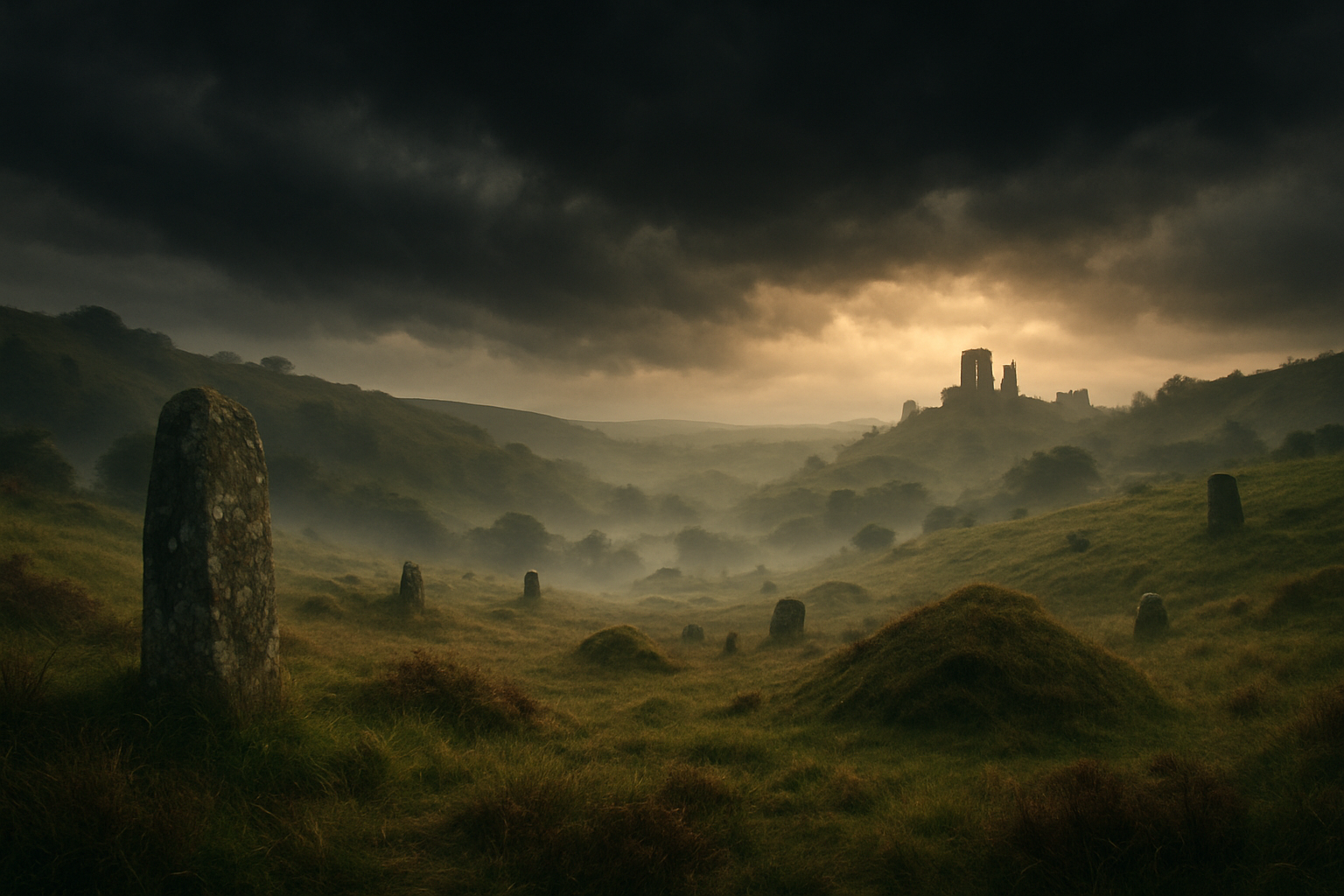
The valley once known as Danesley after the Battle of Ethandun
Now that we have explored the mystical elements surrounding Wiltshire’s ancient monuments, we turn our attention to one of the county’s most haunting geographical features. The picturesque Luccombe Valley harbors secrets far darker than its rolling green hills suggest. This tranquil landscape once bore a different name entirely – Danesley – a designation that speaks to the violence that once soaked its soil.
The valley’s transformation from peaceful countryside to a place of mass death occurred during the tumultuous 9th century, when Anglo-Saxon and Danish forces clashed in brutal territorial disputes. Archaeological evidence suggests that the aftermath of these conflicts left the valley littered with the remains of fallen warriors, forever changing its character and reputation in local memory.
Multiple burial sites discovered across different time periods
Archaeological excavations throughout Luccombe Valley have revealed a complex tapestry of human remains spanning several centuries. These discoveries paint a picture of recurring violence and death that extends well beyond any single historical event. The burial sites vary significantly in their organization and contents, suggesting different cultural practices and time periods.
Some graves contain multiple individuals buried hastily together, while others show evidence of more deliberate, ritualistic interment. The variation in burial practices indicates that this valley served as a site of death and disposal for generations, accumulating layers of human tragedy over time.
Evidence of both Viking massacre victims and ritual sacrifice remains
The archaeological record reveals a disturbing duality in the types of remains found within Luccombe Valley. Physical evidence points to both battlefield casualties and what appears to be ritual sacrifice victims. The positioning of skeletal remains, along with associated artifacts, suggests that this location served multiple dark purposes throughout its history.
Weapons fragments and defensive wounds on bones indicate violent deaths consistent with warfare, while other remains show signs of deliberate positioning and ceremonial treatment that speaks to ritualistic killing practices.
How folklore preserved the memory of this execution ground through centuries
With this dark history embedded in the landscape, local folklore naturally evolved to preserve these memories long after the events themselves faded from historical record. Oral traditions passed down through generations maintained awareness of the valley’s sinister past, even when official documentation had been lost or forgotten.
These folk tales served as an informal historical archive, ensuring that the knowledge of mass graves and ancient executions remained alive in community consciousness despite the passage of centuries.
The Intertwining of Archaeological Facts and Dark Folklore Traditions
How Scientific Discoveries Reshape Ancient Legends and Local Stories
Archaeological excavations across Wiltshire’s ancient sites continuously challenge and reframe the supernatural tales that have persisted for generations. When researchers uncover burial practices, ritual artifacts, and settlement patterns, they often provide rational explanations for phenomena that folklore attributed to otherworldly forces. Previously mysterious “cursed” locations frequently reveal themselves as strategic defensive positions or sacred ceremonial grounds with entirely practical purposes.
Modern dating techniques and soil analysis transform vague legends into precise historical narratives. What local tradition described as supernatural occurrences often correlates with documented periods of conflict, disease, or social upheaval. These scientific insights don’t necessarily diminish the power of folklore; instead, they add layers of understanding that make the stories more compelling and historically grounded.
The Difficulty of Separating Historical Truth from Supernatural Tales
Now that we have covered how science illuminates folklore, we must acknowledge the complex challenge of distinguishing factual events from embellished narratives. Centuries of oral transmission inevitably blur the boundaries between documented history and mythological interpretation. Archaeological evidence might confirm that mass burials occurred at specific sites, but determining whether deaths resulted from battle, plague, or ritual sacrifice requires careful analysis of multiple sources.
The intermingling becomes particularly complex when supernatural elements serve as metaphors for real historical trauma. Communities often processed collective memories of violence or tragedy through fantastical storytelling, making it difficult for modern researchers to extract the historical kernel from its mythological shell.
Why Some Locations Become Magnets for Death and Burial Across Millennia
With this understanding of folklore’s relationship to history in mind, certain geographical features naturally attract repeated human activity across vast time periods. Elevated positions, natural springs, and strategic river crossings serve practical purposes that transcend individual civilizations. These locations accumulate layers of human remains and ritual deposits because they remain consistently valuable for defense, ceremony, or settlement.
The concentration of death and burial at these sites creates a self-perpetuating cycle. Each generation discovers evidence of previous occupation, reinforcing the location’s perceived significance. Archaeological layers reveal continuous use patterns that span from prehistoric times through medieval periods, suggesting that certain landscapes possess enduring strategic or spiritual importance.
The Role of Oral Tradition in Keeping Dark Histories Alive Through Generations
Previously established locations of historical significance rely heavily on oral transmission to preserve their darker chapters. Families and communities pass down stories that official records might omit or sanitize, maintaining awareness of traumatic events that shaped local identity. These narratives serve as unofficial historical archives, preserving details about conflicts, executions, and social tensions that formal documentation might ignore.
Oral tradition functions as both preservation method and creative process, allowing stories to evolve while maintaining their essential emotional truth. The darkest tales often persist most vividly because they address fundamental human fears and serve as cautionary reminders of past dangers. Through repeated telling, these stories become embedded in local consciousness, ensuring that significant historical events remain accessible to future generations even when written records disappear.
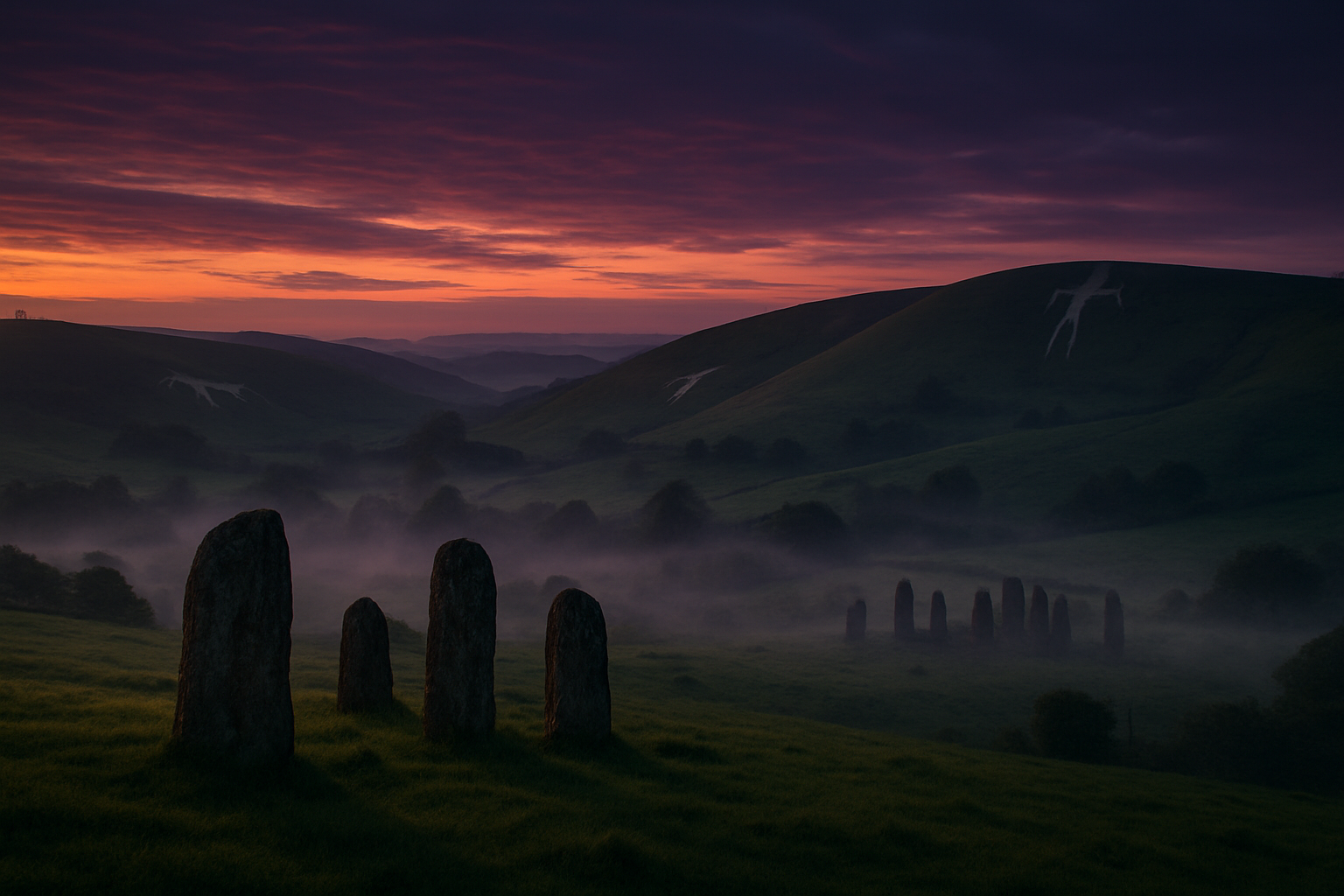
Wiltshire’s rolling hills hold more than just pastoral beauty—they cradle centuries of bloodshed, ritual sacrifice, and ancient mysteries that refuse to stay buried. From the Romano-British execution site at the Blood Stone to the Danish mass graves in Luccombe Valley, each location reveals how archaeological evidence intertwines with dark folklore traditions. The starving Vikings trapped at Bratton Camp and the midnight journeys of the White Horse of Westbury demonstrate how history and legend blur together, creating stories that evolve with each generation while maintaining their chilling core.
These terrifying tales remind us that folklore serves as the oral history of a people, preserving memories that official records cannot capture. The layers of tragedy and mystery beneath Wiltshire’s landscape continue to spark the imagination, proving that some stories are too powerful to be forgotten. Whether you’re a history enthusiast or simply drawn to the darker side of Britain’s past, these hidden corners of Wiltshire offer a haunting glimpse into the shadows that still linger in England’s ancient countryside.
Alright, I stumbled upon donaldbet and gave it a peek. The layout’s clean and easy to navigate. Threw down a few small bets just to test the waters. Seems legit so far. Give it a try and let me know what you think! More info here: donaldbet
**aquasculpt**
aquasculpt is a premium fat-burning supplement meticulously formulated to accelerate your metabolism and increase your energy output.
**backbiome**
backbiome is a naturally crafted, research-backed daily supplement formulated to gently relieve back tension and soothe sciatic discomfort.
**boostaro**
boostaro is a specially crafted dietary supplement for men who want to elevate their overall health and vitality.
**vivalis**
vivalis is a premium natural formula created to help men feel stronger, more energetic, and more confident every day.
**glycomute**
glycomute is a natural nutritional formula carefully created to nurture healthy blood sugar levels and support overall metabolic performance.
**balmorex**
balmorex is an exceptional solution for individuals who suffer from chronic joint pain and muscle aches.
**aqua sculpt**
aquasculpt is a revolutionary supplement crafted to aid weight management by naturally accelerating metabolism
**alpha boost**
alpha boost for men, feeling strong, energized, and confident is closely tied to overall quality of life. However, with age, stress, and daily demands
**hepato burn**
hepatoburn is a high-quality, plant-forward dietary blend created to nourish liver function, encourage a healthy metabolic rhythm, and support the bodys natural fat-processing pathways.
**prostavive**
prostavive Maintaining prostate health is crucial for mens overall wellness, especially as they grow older.
**nervecalm**
nervecalm is a high-quality nutritional supplement crafted to promote nerve wellness, ease chronic discomfort, and boost everyday vitality.
**synadentix**
synadentix is a dental health supplement created to nourish and protect your teeth and gums with a targeted combination of natural ingredients
**nitric boost ultra**
nitric boost is a daily wellness blend formulated to elevate vitality and support overall performance.
**yu sleep**
yusleep is a gentle, nano-enhanced nightly blend designed to help you drift off quickly, stay asleep longer, and wake feeling clear
**prodentim**
prodentim is a distinctive oral-care formula that pairs targeted probiotics with plant-based ingredients to encourage strong teeth
**gl pro**
glpro is a natural dietary supplement designed to promote balanced blood sugar levels and curb sugar cravings.
**mindvault**
mindvault is a premium cognitive support formula created for adults 45+.
**vitrafoxin**
vitrafoxin is a premium brain enhancement formula crafted with natural ingredients to promote clear thinking, memory retention, and long-lasting mental energy.
**vertiaid**
vertiaid is a high-quality, natural formula created to support stable balance, enhance mental sharpness, and alleviate feelings of dizziness
**femipro**
femipro is a dietary supplement developed as a natural remedy for women facing bladder control issues and seeking to improve their urinary health.
**glucore**
glucore is a nutritional supplement that is given to patients daily to assist in maintaining healthy blood sugar and metabolic rates.
**sugarmute**
sugarmute is a science-guided nutritional supplement created to help maintain balanced blood sugar while supporting steady energy and mental clarity
**prime biome**
The natural cycle of skin cell renewal plays a vital role in maintaining a healthy and youthful appearance by shedding old cells and generating new ones.
**tonic greens**
tonic greens is a cutting-edge health blend made with a rich fusion of natural botanicals and superfoods, formulated to boost immune resilience and promote daily vitality.
**gluco6**
gluco6 is a natural, plant-based supplement designed to help maintain healthy blood sugar levels.
**oradentum**
oradentum is a comprehensive 21-in-1 oral care formula designed to reinforce enamel, support gum vitality, and neutralize bad breath using a fusion of nature-derived, scientifically validated compounds.
**sleep lean**
is a US-trusted, naturally focused nighttime support formula that helps your body burn fat while you rest.
**biodentex**
biodentex is a dentist-endorsed oral wellness blend crafted to help fortify gums, defend enamel, and keep your breath consistently fresh.
**provadent**
provadent is a newly launched oral health supplement that has garnered favorable feedback from both consumers and dental professionals.
**finessa**
Finessa is a natural supplement made to support healthy digestion, improve metabolism, and help you achieve a flatter belly.
Bạn có thể tạo nhiều hồ sơ chơi khác nhau trên 7m – ví dụ: một cho slot, một cho thể thao – quản lý dễ dàng. TONY01-25H
888SLOT hỗ trợ chơi song song nhiều slot – mở 2-3 tab game cùng lúc để tăng cơ hội trúng thưởng. TONY01-29O
Thinking bout registering at jljl2register.com, has anyone used this jljl2register, let me know! jljl2register Looks OK, but you never know, I wanna try it.
MMO88.info seems like it’s full of games, not sure if they’re legit. Anyone had a good experience? I’m a little sus on the url. You can find mmo88.
PHJLJL looks suspiciously shady. I’d be very careful before putting any money in there. Just a heads up. Do your research before hitting phjljl.
I always check this site for ‘ty so ma cao’. It’s my trusted source. Highly recommend it for quick and accurate scores! ty so ma cao.
For the best ‘tỷ số ma cao’, this site is on point. Never miss a goal with their live updates. You’ve gotta bookmark this! tỷ số ma cao.
Who doesn’t love free stuff? Especially when it’s ‘7m.cn ma cao truc tuyen free’! This site delivers the goods without charging a dime. Awesome! 7m.cn ma cao truc tuyen free.
Sup folks, I checked out mex66. Pretty standard, but it will get you somewhere if you play it right. Would suggest to give it a go! Here’s the link: mex66
Alright, xxlucky. Seems like a newer site. The bonus offers are tempting, but do your research first. Always gotta be careful out there. See what’s up at xxlucky.
wwwmajestic777, now that sounds fancy. I found some cool options here. Check them out at wwwmajestic777.
xn88 – Trang cược trực tuyến an toàn đầu tư mạnh mẽ vào hạ tầng máy chủ đặt tại các trung tâm dữ liệu lớn toàn cầu, đảm bảo đường truyền luôn thông suốt và không bị ảnh hưởng bởi yếu tố địa lý. TONY02-25O
Trying to find qk777gamedownload? Well I have! And gotta say, the download was smooth and I’ve been having a blast. Good times! qk777gamedownload
You guys gotta check out phfamous for your… well, you know. It’s got all the good stuff. phfamous
Binggoplus is a must-try if you’re into bingo. Loads of fun, and the prizes are pretty cool. Good luck y’all! Try out binggoplus
**purdentix**
PurDentix is a revolutionary oral health supplement designed to support strong teeth and healthy gums. It tackles a wide range of dental concerns
**citrusburn**
CitrusBurn is a Mediterranean-inspired thermogenic formula created to support a naturally slower metabolism, encourage efficient fat utilization.
**boostaro**
Boostaro is a purpose-built wellness formula created for men who want to strengthen vitality, confidence, and everyday performance.
**prodentim**
ProDentim is a distinctive oral-care formula that pairs targeted probiotics with plant-based ingredients to encourage strong teeth, comfortable gums, and reliably fresh breath.
**manergy**
Manergy is an advanced male vitality supplement created to help support healthy testosterone levels
Những chương trình khuyến mãi hấp dẫn luôn là điểm sáng của nhà cái taptap. Với ưu đãi 1.500.000 đồng khi người chơi bet88 thực hiện nạp lần đầu, cơ hội gia tăng vốn cược chưa bao giờ dễ dàng đến thế. Không chỉ vậy, các chương trình hoàn trả cược tại casino, bắn cá, hay cá cược thể thao cũng được nhà cái taptap cập nhật liên tục với tiền thưởng không giới hạn. Khi chơi tại taptap, bạn sẽ luôn cảm nhận được sự quan tâm từ hệ thống qua các ưu đãi hàng tuần, khuyến mãi sinh nhật hay sự kiện đặc biệt. Hệ thống cá cược tại taptap luôn được nâng cấp liên tục, đảm bảo trải nghiệm chơi tốt nhất cho mọi người. Với hàng loạt trò chơi, giải đấu, tỷ lệ cược hấp dẫn cùng giao dịch rút tiền về ngân hàng dễ dàng, đây chính xác là nơi bạn cần để tham gia cá cược trực tuyến. Còn chần chờ gì nữa, hãy truy cập website XN88 HIPHOP ngay để đăng ký tài khoản tapbet thôi nào! TONY03-25
Toàn bộ hệ thống được vận hành dưới tiêu chuẩn bảo mật SSL 128-bit, giúp mã hóa mọi dữ liệu giao dịch và thông tin cá nhân. Tất cả các thao tác như đăng nhập, rút tiền hay xác minh đều được mã hóa ở cấp độ cao nhằm loại bỏ nguy cơ rò rỉ dữ liệu. 66B còn hợp tác với các đơn vị kiểm toán độc lập để định kỳ rà soát hệ thống, đảm bảo tuân thủ đúng các yêu cầu kỹ thuật và pháp lý quốc tế. TONY04-08
Hệ thống thanh toán của 66b – Trang Chủ Chính Thức = Đỉnh Cao Cá Cược Trực Tuyến Châu Á được tích hợp các công nghệ bảo mật hiện đại, đảm bảo rằng mọi giao dịch đều được mã hóa bảo vệ an toàn. Điều này giúp người chơi yên tâm thực hiện giao dịch mà không lo lắng về việc thông tin cá nhân hay tài khoản bị xâm nhập. Với hệ thống thanh toán nhanh chóng, an toàn và tiện lợi, nhà cái đã xây dựng lòng tin cùng sự hài lòng tuyệt đối từ cộng đồng người dùng. TONY04-28
nhà cái xn88 không chỉ là nhà cái – đó là hệ sinh thái giải trí toàn diện: thể thao, casino, bắn cá, e-sports và đặc biệt là slot siêu hot. TONY05-01